Ekolo Mundo does not control the feasibility or viability of the proposed solutions
Solution proposed by : IRD
INTRODUCTION
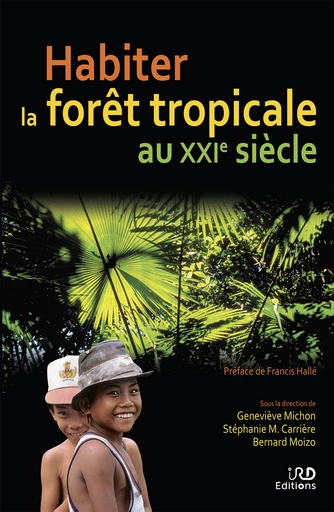
As major ecosystems in the fight against global warming and hotspots of biodiversity, tropical rainforests are home to more than 700 million people at the start of the 21st century.
Sometimes viewed as guardians of the forest, sometimes blamed for deforestation, these forest-dwelling communities are the subject of many misconceptions. But who are they really, and how do they live in the modern world?
From the last hunter-gatherer peoples to landless migrants, from farmers to rubber tappers, oil palm growers, and foresters, this book describes the reality of these communities in all their diversity. It highlights the richness of their relationships with the forest, their perceptions, their practices, and their customs. It illustrates how they are part of globalization, and how the global market and public policies affect their ways of life. Finally, it underscores the impact of global change and the resulting financial mechanisms on the management of tropical forests and the future of forest-dwelling populations.
A unique overview of the tropical forests of the Amazon, Central Africa, Southeast Asia, and Madagascar, this book brings together texts by anthropologists, ecologists, geographers, economists, and others. It is supported by rich and original imagery, capturing the communities and the terrain up close.
TABLE OF CONTENTS
Part 1 - What Is a Forest?
- Introduction: The Impossible Scientific Consensus on Forests
- Chapter 1: What Is a Forest? Answers from the Social Sciences
- Chapter 2: An Ecologist’s Perspective on “Natural” Tropical Forests
Part 2 - The “forest peoples,” between integration and marginalization
- Introduction: The “forest peoples”: Who are we talking about?
- Chapter 3: The inhabitants of tropical forests: from myths to realities
- Chapter 4: The New Actors in the Tropical Forest
- Chapter 5: The Last Hunter-Gatherer Peoples of the Tropical Forests
- Chapter 6: Feeding in the Forest. Food as a Total Social Fact
Part 3 - Thinking About, Representing, and Sharing the Forest
- Introduction: Representations, Knowledge, and Access Rights. To Each His Own Forest?
- Chapter 7: The Pwo Karen of Thailand, Children of the Forest. An Identity Based on Harmony
- Chapter 8: The Forest in Children’s Drawings (Madagascar). A Representation of the Wild and the Domesticated
- Chapter 9: Local Knowledge Under Scrutiny
- Chapter 10: A Highly Anthropogenic “Natural” Forest. Coffee, People, and Honey in Southwest Ethiopia
- Chapter 11: The “Orphans of the Forest.” Reflections of a Society of Slash-and-Burn Farmers in Southern Cameroon
- Chapter 12: Rules for managing the forest. Examples from Indonesia
Part 4 - Gathering, Hunting, and Cultivating the Forest
- Introduction: Forest dwellers: gatherers, hunters, farmers, herders
- Chapter 13: Shifting cultivation. Common misconceptions, rationales, and contemporary realities
- Chapter 14: Cultivating the Forest. Agroforests: A Tradition with a Future
- Chapter 15: Honey in the Forest
- Chapter 16: Hunting. An increasingly lucrative yet increasingly unsustainable activity
- Chapter 17: River fishing. A little-known and threatened cultural biodiversity
- Chapter 18: Beyond Timber. Non-Timber Forest Products and Extractivism
Part 5 - Deforestation: From a Global Perspective to the Diversity of Local Dynamics
- Introduction: Deforestation: Processes, Situations, and Challenges
- Chapter 19: The Disappearance of Tropical Forests. The Amazonian Example
- Chapter 20: The Management of Tropical Rainforests. The Past, the Present, and the Future
- Chapter 21: Oil palms and deforestation in Indonesia
- Chapter 22: From contested forests to deforested lands: The case of Côte d’Ivoire
- Chapter 23: Forests and Biological Invasions
Part 6 - A Highly Political Forest
- Introduction: The Tropical Forest: From Local Realities to Global Ecopolitics
- Chapter 24: Building the Link Between Local Knowledge and Biological Diversity
- Chapter 25: History of Conservation Policies in the Brazilian Amazon
- Chapter 26: The Symbolic Failure of Forest Policies in Laos
- Chapter 27: Conserving Tropical Forests: The Protected Areas Tool
- Chapter 28: Forests, Climate Change, and Carbon
FEATURES
Publisher: IRD Editions
Series: Reference
Publication Date: March 15, 2019