
Solution proposed by : Bernadette Gottvalles
Ekolo Mundo does not control the feasibility or viability of the proposed solutions
Structure : COOPTERRE (aquaponics in Kinshasa)


Congo, the democratic republic of the
Kinshasa
Difficulty level :
- Establish a vegetable and fish production system based on aquaponics in ponds to improve local production and protect wetlands.
- Train market gardeners in this new technique so they can develop their skills and increase their production
SUPPORTING SUSTAINABLE AGRICULTURE IN THE HEART OF KINSHASA
This project aims to develop a new form of agro-aquaculture based on the principle of aquaponics and to build the capacity of market gardeners in the Tshwenge area, so they can increase and diversify their production and income while enhancing and preserving the natural wetlands of Kinshasa.
Selecting a productive, sustainable, and context-appropriate agro-aquaculture production technique
Drawing on the expertise of local vegetable farmers and fish farmers, the project proposes, at each pilot site, agro-aquaculture systems adapted to the context of Kinshasa and the needs of its residents, based on the aquaponics technique.
This technique increases vegetable production tenfold. It is complemented by fish production in a fully organic system that manages the water cycle.
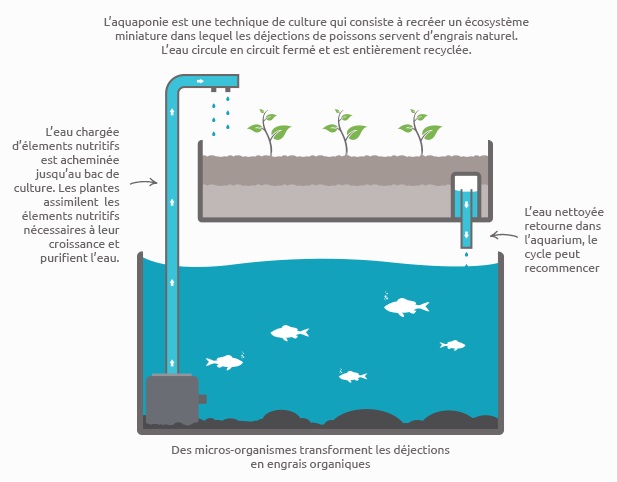
The Principle of Aquaponics
Aquaponics combines fish farming and vegetable gardening by using water from the fish to grow plants.
The plants thus purify the water before it is recycled back into the fish-rearing tank or released into the natural environment
The Initiatives
Various facilities were set up throughout the project in response to the opportunities and challenges encountered in the field.
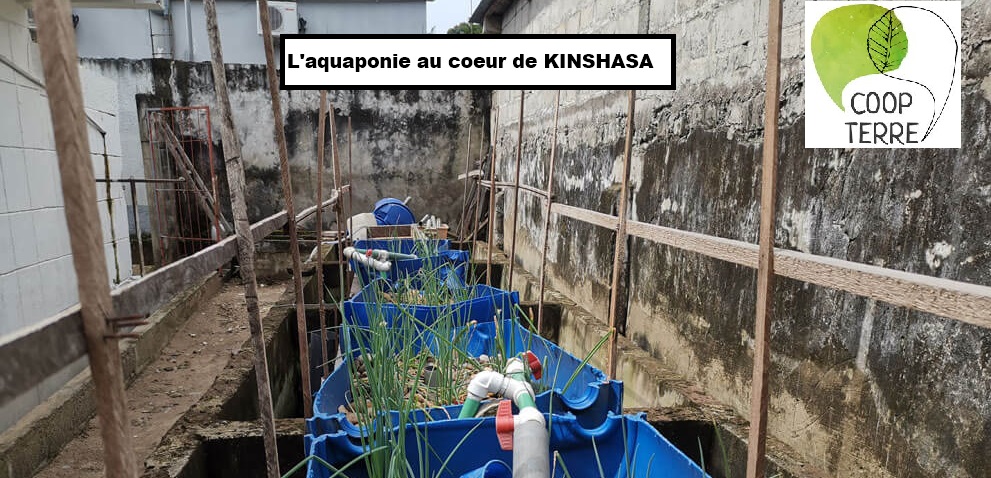
· 17 traditional aquaponics ponds,
· 4 rice-fish farming plots and 2 above-ground domestic aquaponics systems were constructed as part of the project
The project has successfully reached a diverse audience, and more than 200 people (vegetable farmers, fish farmers, ministry officials, students, trainers, families, etc.) have been trained, which will enable the project to achieve a significant impact in the medium term.