
Solution proposed by : Bernadette Gottvalles
Ekolo Mundo does not control the feasibility or viability of the proposed solutions
Structure :


France
Difficulty level :
Where should you set up your rooftop garden?
This idea will be easier to implement if you’re lucky enough to have a rooftop terrace. However, you need to choose the location of your future garden carefully:
Setting up the rooftop
• Setting up a vegetable garden in a small space also requires a place to store gardening tools, an area for sowing seeds and sheltering seedlings, and another for your wooden compost bin, if applicable.
• Ideally, install a rainwater collection system. This is more eco-friendly, as you won’t be wasting drinking water on irrigation.
• If needed, install a lighting system for winter mornings and evenings, when you’ll want to check on your vegetables after getting home from work.
• And if you have the space, this is also a great opportunity to create a little reading nook, or set up a small table and chairs for happy hour on the roof!
Creating the “rooftop garden” itself
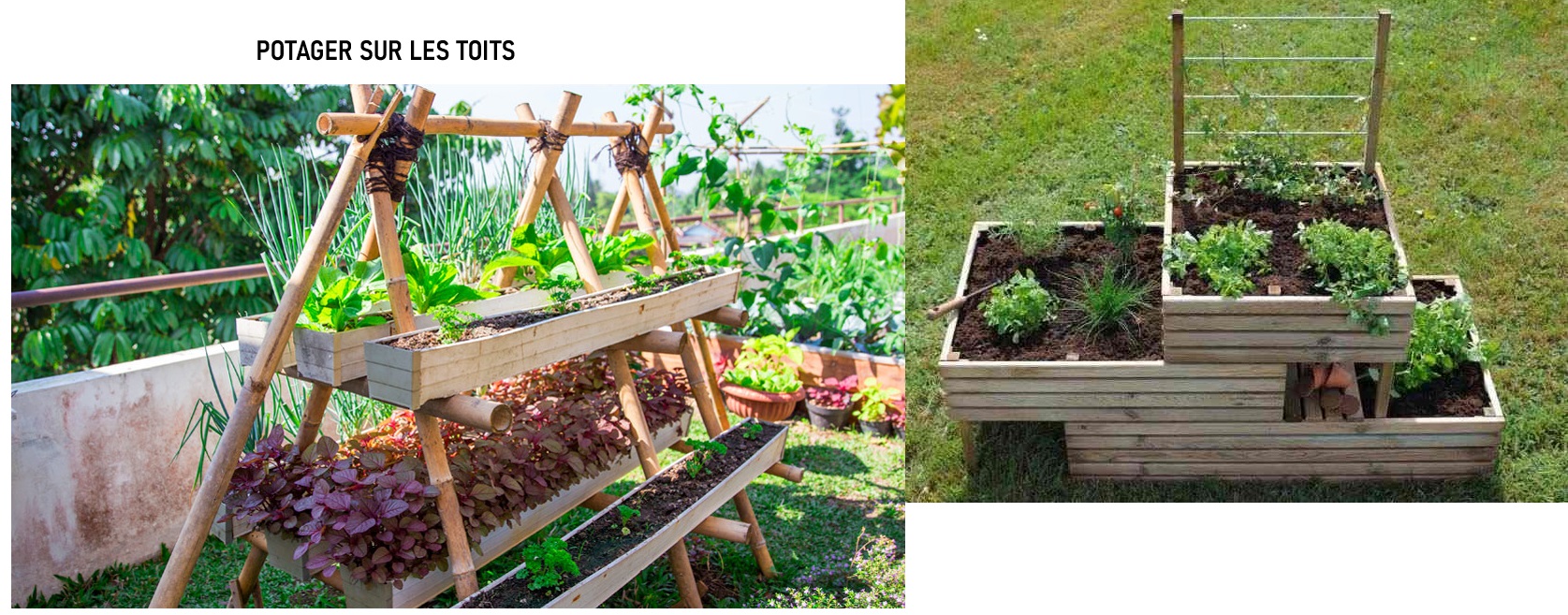
Raised pots or planters as a guide to urban gardening: It’s clear that you won’t be able to grow plants directly in the ground. To overcome this small obstacle, “soil-less” gardening is the obvious solution, as is a vertical garden.
You can then place large round, square, or rectangular pots here and there—the shape doesn’t matter! The goal is also to have a beautiful rooftop garden. Additionally, you’ll need to plan for space to move between and around the garden containers (about 80 cm of walkway) to make maintaining the garden easier.
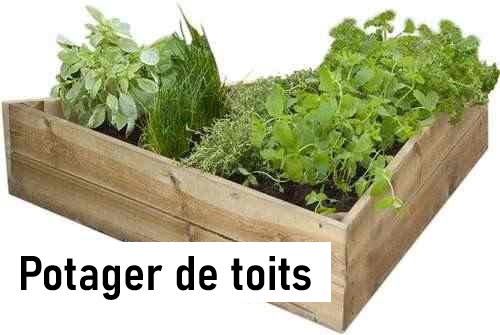
You can elevate them or opt for a raised garden bed for greater convenience (and to spare your back!)
Is your roof small and more like a balcony? In that case, choose to create rectangular planters that you’ll install along the railing, then shelf-style planters on the wall side.
You can also purchase ready-to-use corner vegetable gardens or stepped vegetable beds made from FSC-certified wood.
Drainage and Water Runoff
This is one of the challenges of a rooftop garden. You must absolutely consider drainage for your elevated garden and your pots so that the roots don’t end up in excess water or even drown.
Here are a few ideas:
Prepare good soil for your vegetable garden: The ideal soil for a vegetable patch is loose, well-draining, and nutrient-rich. Next, consider mulching the garden by spreading wood chips or shredded green waste.
Regulations
You should check with the building’s homeowners’ association before starting your rooftop garden project. In particular, you need to ensure that the roof can support the weight of your garden, that it is properly waterproofed, and that there is no danger to you or other occupants, etc.
For single-family homes, a permit from the city hall is required