
Solution proposed by : Plantes et Cite
Ekolo Mundo does not control the feasibility or viability of the proposed solutions
Structure : Plants & City


France
Difficulty level :
The challenges of adapting to global changes and slowing the decline in biodiversity require a rethinking of the models used to design and manage urban green spaces. In cities, vegetation serves not only as a structuring or aesthetic element but also as a response to public health and ecosystem health needs. In dense urban environments, it is possible to work in small, targeted ways to enhance the functions provided by green spaces.
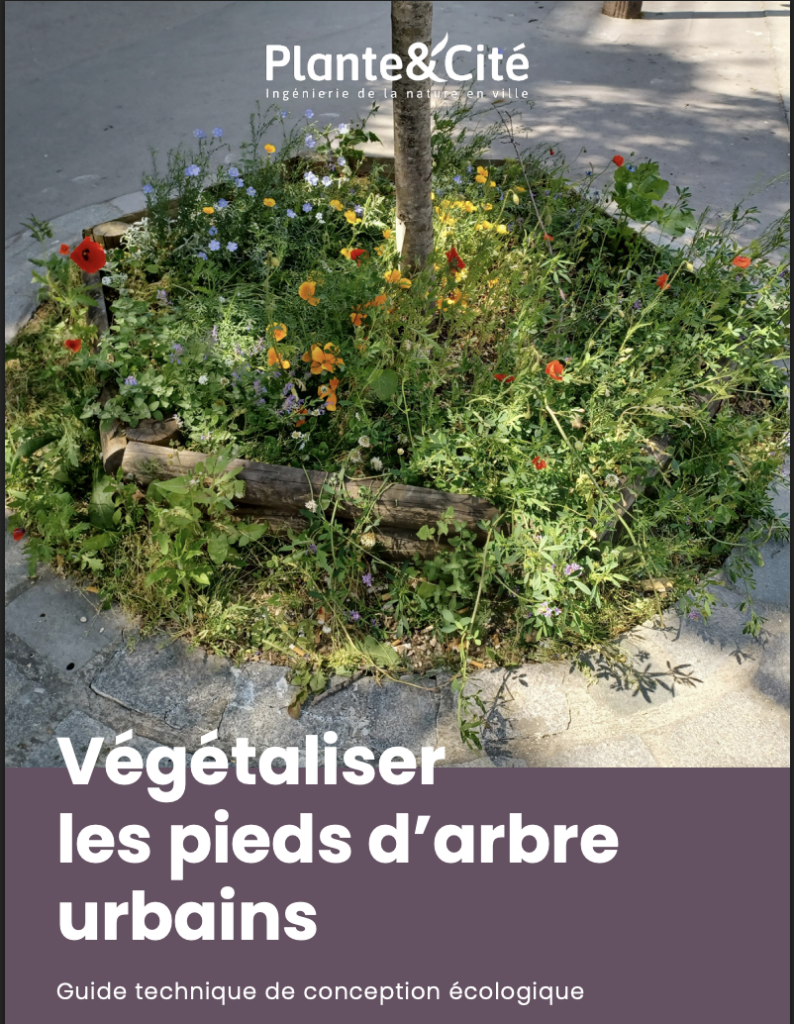
Tree bases—including the planted areas around the base and the gaps between rows of trees—offer potential for greening that remains largely untapped or under-documented. Many cities are implementing programs designed to enhance the environmental, landscape, and social functions of these spaces. These initiatives sometimes draw on new models for the design and management of green spaces, promoting an ecological approach aimed at delivering a wide range of ecosystem services.
The purpose of this guide is to explore in depth the design methods for these developments and the ecological management of urban tree bases. It aims to better understand how these measures support biodiversity by increasing interactions between flora and fauna, as well as to highlight practices that promote more sustainable management with less impact on the environment and resource use.
Dagois R., Dépinoy M., Haouzi M., 2025. Greening Urban Tree Bases. Technical Guide to Ecological Design. Plante & Cité, 52 p
SUMMARY
1. UNDERSTANDING THE ISSUES
2. IMPLEMENTING FUNCTIONAL VEGETATION
About Plante & Cité:
Plante & Cité is a national research and experimentation organization focused on green spaces, landscape, and nature in urban areas. This technical center facilitates the transfer of scientific knowledge to professionals in businesses and local governments.
We produce resources that address the top priorities of professionals: implementing ecological management, conserving water, selecting plants suited to urban conditions, preserving biodiversity, and understanding the benefits of plants for health and well-being…
Plante & Cité is a non-profit organization established in Angers in 2006, as part of the Végépolys Valley competitiveness cluster, to address a shared need for experimentation and the sharing of professional practices in the sustainable management of green spaces.
Sponsored by the Association of Mayors of France, it is recognized by the Ministries of Ecological Transition, Territorial Cohesion, and Agriculture. Plante & Cité manages the websites www.ecophyto-pro.fr and www.nature-en-ville.com.
Plante & Cité receives support from the French Interprofessional Association for Horticulture, Floristry, and Landscaping (VALHOR), Angers Loire Métropole, and the Pays de la Loire Regional Council.