Ekolo Mundo does not control the feasibility or viability of the proposed solutions
Solution proposed by : IRD
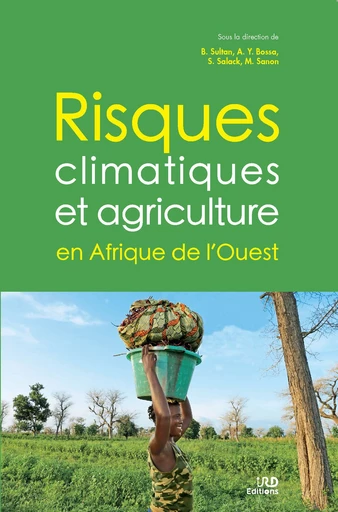
The future of West Africa depends on the agricultural sector’s ability to adapt in order to ensure food security amid climate change and population growth. To facilitate this adaptation, researchers have made significant efforts to improve understanding of climate mechanisms and their impacts on agro-pastoral systems. However, these research findings are rarely taken into account in planning and decision-making.
Based on this observation, a research project titled “Agriculture and Climate Risk Management: Tools and Research in Africa,” supported by the French Ministry of Foreign Affairs and International Development, is being conducted between 2016 and 2018 in several West African countries. Its objective is to develop effective climate risk management tools for farmers by co-creating, with networks of researchers and stakeholders directly involved in agricultural support, innovative strategies based on research findings.
This book presents the main findings of this action research across three priority themes: climate services for agriculture, water resource management, and ecological intensification. It enables stakeholders in the agricultural sector (farmers’ organizations, value chains, the private agricultural sector, agricultural development banks, input suppliers, and agricultural and meteorological services) to adopt new knowledge and tools to better account for climate risks in the management of production systems.
TABLE OF CONTENTS:
- Part I: Agroclimatic Information for Decision Support
- Verifying the quality of a climate service for agriculture
- Predictability of false starts to the agricultural season in the Sahel
- Determinants of rainfall information use (northern and southwestern Burkina Faso)
- Effects of soil waterlogging on the growth, development, and productivity of maize
- Relationship between soil fertility and rainwater productivity in maize (Burkina Faso)
- Rice production assessment in lowlands facing climate risks. The effects of flood hazards (Lofing-Bankandi, Dano, Burkina Faso)
- Risk management at the plot level in lowland rice farming (Dano, Burkina Faso)
- Part II: Management of floodplains in the context of climate change
- Floodplain agriculture in West and Central Africa. A degree of resilience in the face of climate variability and river regulation
- Does floodplain agriculture have a future in Senegal? An analysis using the SWOT method: “Strengths-Weaknesses-Opportunities-Threats”
- Floodplain agriculture at the mercy of the variability of Senegalese public policies
- “Between Two Waters”: Floodplain agriculture in the face of cross-border policies in the Senegal River Valley
- Improving floodplain sorghum cultivation practices in the middle Senegal River Valley
- Diversity of agricultural development processes in floodplains and sustainability of infrastructure in Burkina Faso
- Farmers’ pesticide management practices in rice floodplains. Health and environmental risks (Dano, Burkina Faso)
- Hydrological and hydraulic functioning of the redeveloped Bankandi floodplain (Ioba Province, Burkina Faso)
- Floodplain development and land tenure restructuring. The case of Lofing (Burkina Faso)
- Co-creation of innovations for managing lowland rice cultivation under challenging and unpredictable conditions
- Adoption of improved rice varieties in lowlands. Socioeconomic analysis of determining factors
- Development of lowland fields with small dikes along contour lines. Challenges to implementation in the southwestern region of Burkina Faso
- Challenges in organizing producers of developed lowland areas and integrating them into a rice value chain. (Ioba Province, Burkina Faso)
- Part III: Agroecological practices to combat climate change
- Analysis of water flows in sorghum-based cropping systems in the context of climate change
- Perceptions of climate change and farmers’ adaptation strategies (Sudanese zones of Burkina Faso and Mali)
- Climate Change Adaptation Strategies Through the Use of Improved Peanut Varieties (Western Burkina Faso)
- Effect of compost application timing on sorghum yields and rainwater productivity (Sudanese zone of Burkina Faso)
- Agricultural practices and determinants of sorghum adoption in the context of climate change (southern Mali)
- Use of cereal-mucuna forage in the feeding of draft cattle (southern Mali)
- Sorghum breeding for sustainable intensification in Mali. Contributions of crop modeling
CHARACTERISTICS
Publication date: March 15, 2020
Formats: Print book, eBook [PDF], eBook [ePub]
Protection(s): Social watermark (PDF), Social watermark (ePub)
Size(s): 5.01 MB (PDF), 9.89 MB (ePub)
EAN13 Print Book: 9782709928205
EAN13 eBook [PDF]: 9782709928229
EAN13 eBook [ePub]: 9782709928212