
Solution proposed by : Cyril Mercier
Ekolo Mundo does not control the feasibility or viability of the proposed solutions
Structure :


France
Montpellier
Difficulty level :
ROMAN PLASTER.
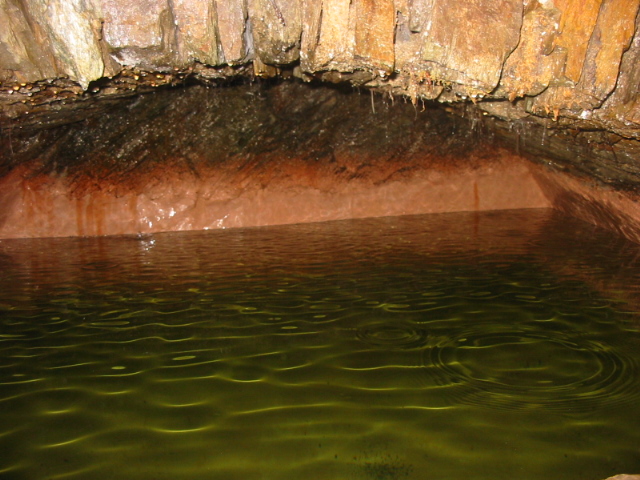
For a pond, you must cover the structure with a tarp to prevent the Roman plaster from drying too quickly.
It must be left covered for at least 7 days.
The plaster will carbonate in at least 6 months and improve over several years; that is, the lime mixed with fired clay will gradually recombine into stone.
For a pond, an aqueduct, a gutter, exterior house plaster, or waterproof plaster in a basement, the structure must dry very slowly.
Therefore, it must be sheltered from the sun and wind.
The ideal time to work is in the spring and fall, when there is higher humidity and less heat.
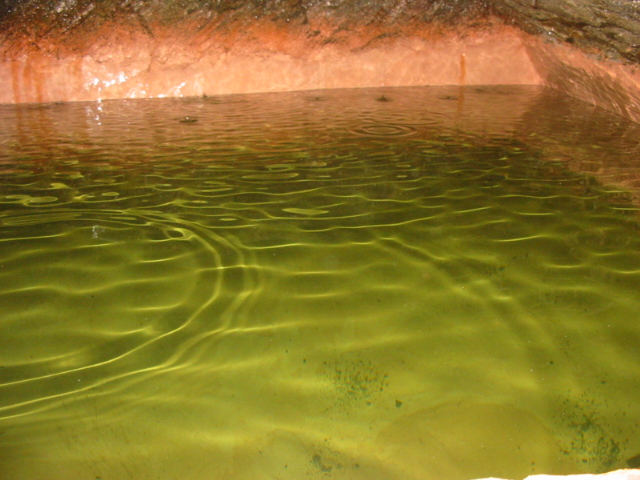
After the final coat (air-dry under a tarp for 24 hours), fill the pond with water slowly.
Why use such an ANCIENT process:
This material lasts for centuries; it bonds with the stone and can accommodate slight movements in the structure or ground, unlike cement.
Furthermore, rainwater or water with an acidic pH will mineralize upon contact with this plaster and become pH-neutral.
From a bacterial perspective, it’s the best.
(Plastic cisterns and other water-repellent cements have an acidic pH and promote the growth of microorganisms).
Roman mortar hardens as it ages, which explains its extraordinary durability over the centuries.
Tile mortar is a mixture of lime and fragments of fired building materials (bricks or tiles). A variety cited by Vitruvius [a Roman architect who lived in the 1st century BC] consists of one part lime, one part crushed and sifted tuileau, and two parts sand. Tuileau, which is fired clay, acts during the mortar’s setting process:
First, the tile dust binds the water released by the initial setting within the mortar
Second, the tuileau releases the bound water, contributing to a particularly strong set.
The widespread use of “Roman concrete” (opus cæmenticium) in construction made possible the remarkable architectural achievements of the Roman Empire.
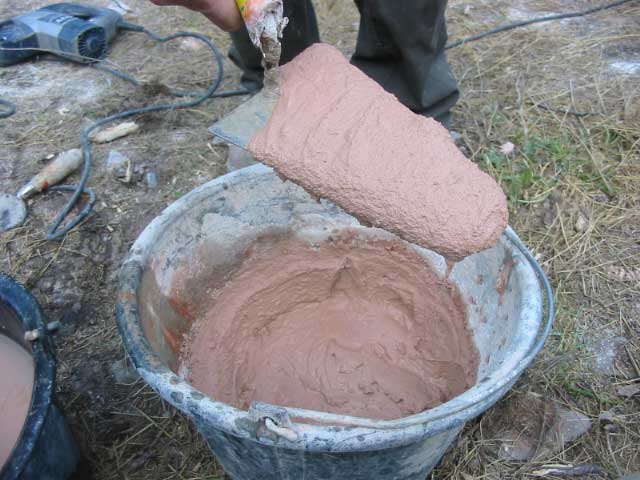
1/Sprayed trowel-applied bonding render, unfinished, drying time 24 hours:
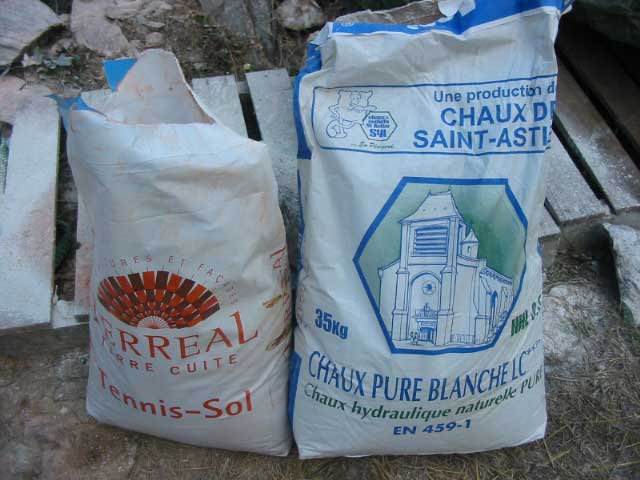
9 parts sand + 1 part crushed brick + 8 parts hydraulic lime (St. Astier type).
2/ Base coat (15 mm thick):
2 parts sand + 1 part hydraulic lime + 1 part crushed brick
Apply in 2 or 3 coats
Allow to dry
3/ Smooth surface coat (3 mm thick):
1 part air lime + 1 part crushed brick + (1 dose of Sika latex)