
Solution proposed by : Terre et Humanisme
Ekolo Mundo does not control the feasibility or viability of the proposed solutions
Contributor email : infos@terre-humanisme.org
Structure : Earth and Humanism


France
Lablachère
Auvergne-Rhône-Alpes
Difficulty level :
facile
What is it ?
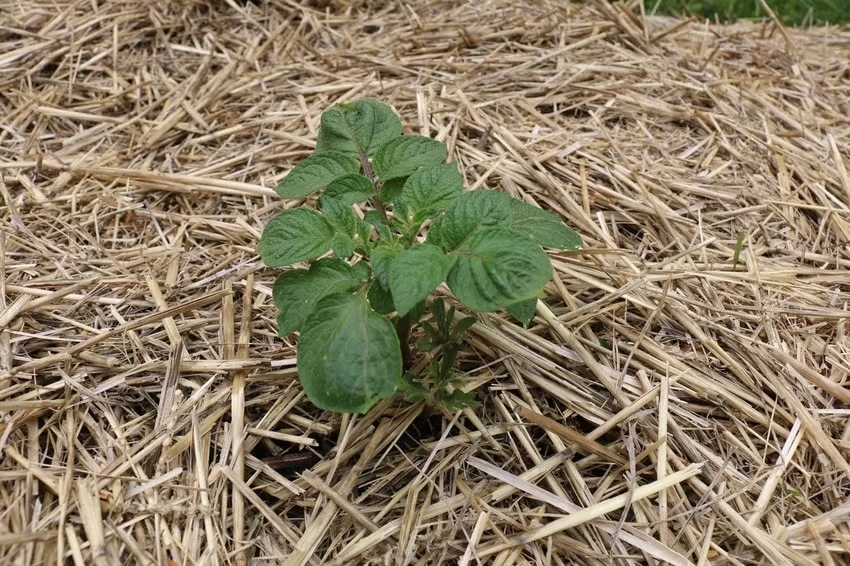
In nature, soil is never bare (with very few exceptions). Dead leaves, fragments of dead wood littering the forest floor, dry grasses covering meadows in winter, and animal debris (droppings, carcasses) are all types of natural ground cover. In an agroecological garden, care is taken not to leave the soil bare; this ground cover is called “mulch,” a term borrowed from English.
What is it for?
It is estimated that 1 hour spent mulching saves 10 hours on other garden tasks:
· Soil tilling: Under the mulch, soil organisms find shelter and nourishment; in return, they work the soil, saving you a few hours of using a grelinette by constantly improving its permeability.
· Protection: Mulch protects the soil from heavy rain, excessive heat, and frost; it thus prevents erosion, leaching, and drying out.
· Weed control: Mulch significantly slows the growth of most wild plants and other weeds.
· Pest control: Mulch provides a home for many beneficial garden animals that will hunt pests for you
· Watering: Good mulch reduces soil evaporation by a factor of four, so you spend less time watering and save water.
What kind of mulch can be used on the ground?
Straw,
Dead leaves,
Cardboard,
Bark,
Dry grass clippings (If using grass clippings as mulch, be careful to spread them in a thin layer, as this material contains a lot of nitrogen and, if used in excess, could rot in place)
Wood chips,
Small garden waste, etc.
How to mulch?
1. You can add compost beforehand to enrich the soil with nutrients.
2. Mulch immediately after planting
3. Apply mulch to a minimum depth of 2 to 3 cm, spreading it evenly.
4. Mulch on moist soil, or water immediately after mulching.
5. Replace the mulch periodically as it is broken down by soil organisms.
Exceptions to the rule:
Ideally, your entire garden should be covered, even the paths; however, there are still some situations where mulching is not possible:
· After direct seeding, mulching would prevent germination.
· After heavy rain on clay soils, to speed up drainage
· At the end of winter, to help the soil warm up faster.
· In case of a slug infestation in the spring or fall.
This fact sheet is taken from the educational fact sheets provided by the Terre et Humanisme association on its website
Difficulty level: Easy