Ekolo Mundo does not control the feasibility or viability of the proposed solutions
Solution proposed by : QUAE Numerique
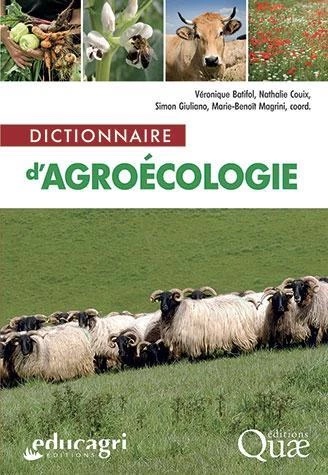
Whether we are citizens, agricultural professionals, development practitioners, scientists, students, or others—we are all affected by the issues surrounding agriculture and food. This agroecology dictionary aims to inform and raise awareness about the challenges of agroecology in order to “produce differently” by rethinking production systems—and, more broadly, food systems. Each definition was written by researchers—sometimes in collaboration with students—and is supplemented by easily accessible online bibliographic references for those wishing to explore the topic further.
A valuable educational resource, this dictionary establishes a framework of reference for citizens, farmers, development actors, educators, scientists, and others. It is an indispensable tool for dialogue between agriculture and society and can be used by anyone wishing to engage in the agroecological transition and drive change in agricultural practices.
Foreword by Christian Huyghe
Foreword
TABLE OF CONTENTS
Definitions
1. Positive-Energy Agriculture
2. Alternative Agriculture
3. Biodynamic Agriculture
4. Organic Farming
5. Soil-Conservation Agriculture
6. Precision farming
7. Sustainable agriculture
8. Ecologically intensive farming
9. Integrated agriculture
10. Climate-smart agriculture
11. Smallholder agriculture
12. Sustainable agriculture
13. Regenerative agriculture
14. Urban agriculture
15. Agrobiodiversity
16. Agroecology
17. Agroecosystem
18. Agroforestry
19. Agro-silvo-pastoralism
20. Sustainable livestock feeding
21. Allelopathy
22. Evolutionary plant breeding
23. Participatory approach
24. Systems approach
25. Aquaponics
26. Self-fertility
27. Self-medication on pasture
28. Self-sufficiency in concentrates and forage
29. Self-Sufficiency in Agricultural Systems
30. Beneficial insects
31. Grass strip
32. Animal welfare
33. Biological control
34. Associated biodiversity
35. Functional biodiversity
36. Planned biodiversity
37. Bioeconomy
38. Biofumigation
39. Bioresource
40. Bioturbation
41. Closure of nutrient cycles
42. Consultation
43. Biodiversity conservation
44. Conscious consumer
45. Perennial vegetation cover
46. Permanent vegetation cover
47. Intercropping
48. Catch crop
49. Topdressing
50. Agroecological design
51. Sustainable development
52. Crop rotation diversification
53. Plant diversity in grasslands
54. Food systems ecology
55. Circular economy
56. Social and Solidarity Economy
57. Ecopathology
58. Ecological knowledge
59. Mountain Livestock Farming Based on Permanent Pastures
60. Precision livestock farming
61. Extensive Livestock Farming
62. Green manure
63. Biological soil fertility
64. Physicochemical soil fertility
65. Sustainable management of soil organic matter
66. Integrated weed management
67. Integrated water resource management
68. Integrated animal health management
69. Economic and Environmental Interest Group
70. Mixed hedge
71. Agroecological Infrastructure
72. Biological input
73. Organic input
74. Living laboratory
75. Lagooning
76. Legumes
77. Conservation-based biological control
78. Crop rotation
79. On-farm micro-anaerobic digestion
80. Natural breeding
81. Rotational grazing
82. Permaculture
83. Useful plants
84. Mixed cropping and livestock farming
85. Diverse grassland
86. Permanent grassland
87. Local Food Initiative
88. Prevention
89. Agroecological crop protection
90. Local breed
91. Crossbreed
92. Sociotechnical system
93. Biological control
94. Relocalization of agriculture
95. Learning network
96. Trophic networks
97. Resilience
98. Resilience of agricultural systems
99. Forage resources
100. Crop rotation
101. Hardiness of breeds
102. Agroecosystem health
103. Soil health
104. Traditional knowledge
105. Food security
106. Participatory plant breeding
107. Farmer-saved seeds
108. No-till planting under cover crops
109. Ecosystem services in agroecosystems
110. Simplicity
111. Food sovereignty
112. Localized food system
113. Responsible innovation system
114. Sociotechnical system
115. Sustainable food systems
116. Input-efficient farming systems
117. Simplified farming techniques
118. Localization of agriculture
119. Alternative treatments for livestock diseases
120. Green and Blue Infrastructure
121. Agroecological transition
122. Reduced-till farming
123. Triple bottom line
124. One Health
125. Population diversity
126. Soil life
List of Abbreviations
Index of Scale Levels
List of Scientific References