
Solution proposed by : Cyril Mercier
Ekolo Mundo does not control the feasibility or viability of the proposed solutions
Structure : Working Group on Desertification (WGD)


Difficulty level :
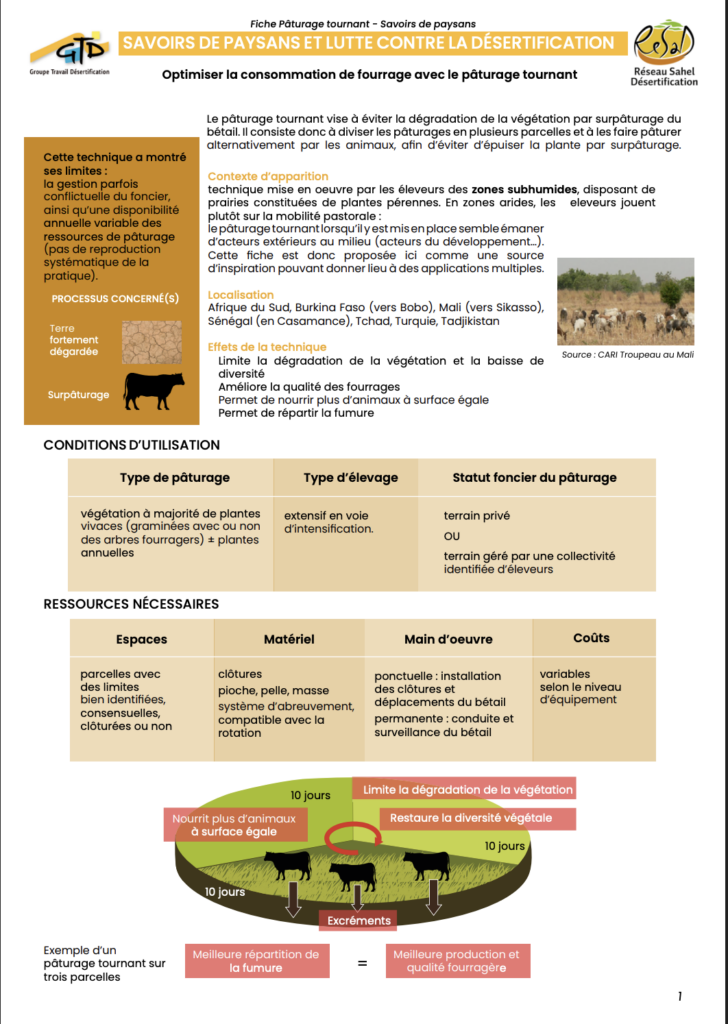
Rotational grazing is designed to prevent vegetation degradation caused by overgrazing by livestock. It involves dividing pastures into several sections and allowing animals to graze on them in rotation, thereby preventing the plants from being depleted by overgrazing.
Background
A technique implemented by herders in sub-humid zones, where pastures consist of perennial plants. In arid zones, herders tend to rely on pastoral mobility: when rotational grazing is implemented there, it appears to originate from actors outside the local community (development actors, etc.). This fact sheet is therefore presented here as a source of inspiration that can lead to multiple applications.
Location
South Africa, Burkina Faso (near Bobo), Mali (near Sikasso), Senegal (in Casamance), Chad, Turkey, Tajikistan
Effects of the technique
Limits vegetation degradation and loss of biodiversity Improves forage quality Allows for feeding more animals on the same land area Enables the distribution of manure
The Desertification Working Group is a network of French actors in international solidarity and development committed to combating desertification, led by CARI