
Solution proposed by : UMMTO-Architecture
Ekolo Mundo does not control the feasibility or viability of the proposed solutions
Structure : UMMTO (University of Tizi Ouzou) - Department of Architecture

Algeria
Mediterranean climate
Difficulty level :
facile
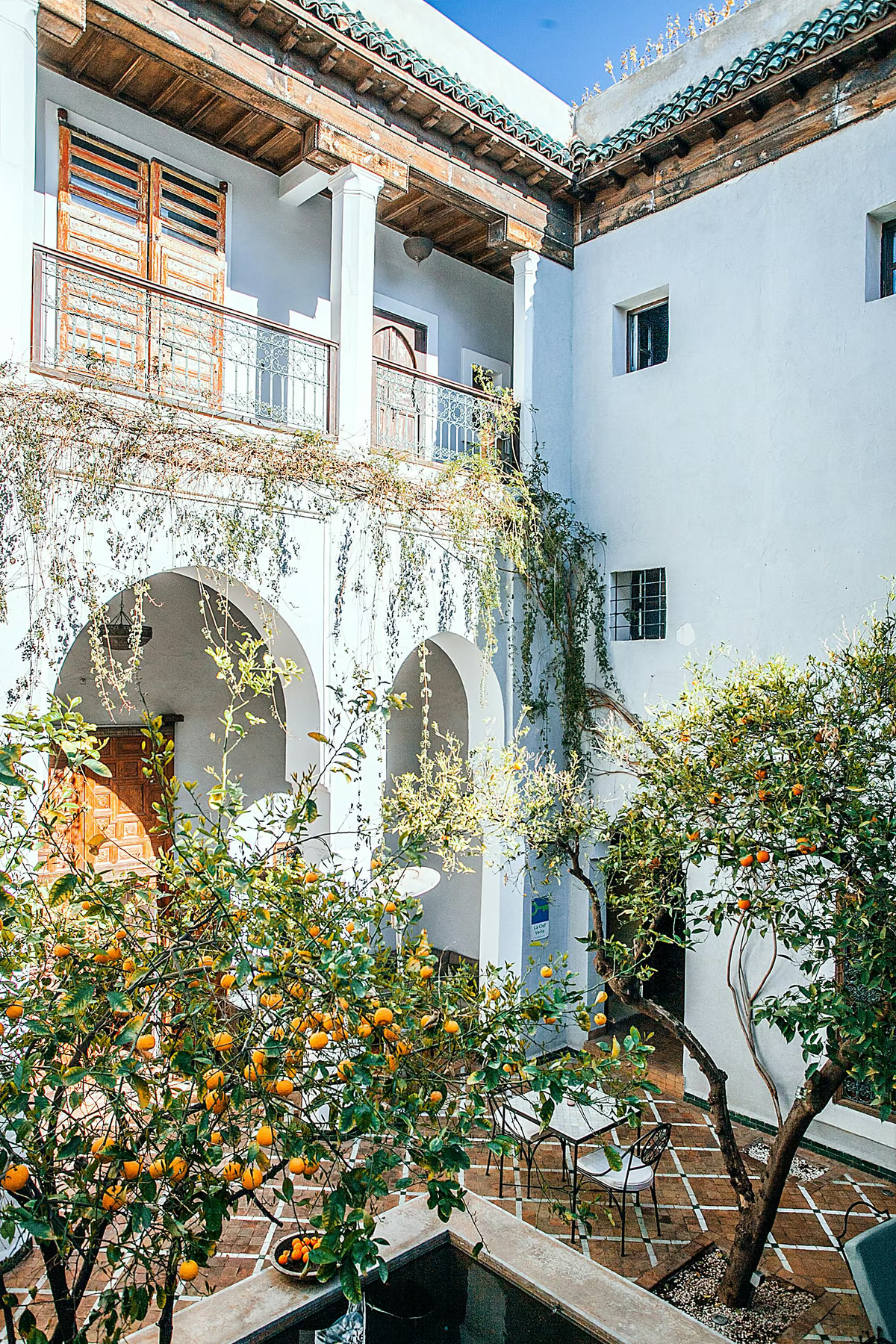
For centuries, people have worked together to address thermal comfort through passive means. Traditional architecture, rooted in communal social life, provided solutions to climate adaptation challenges, but today architecture must also meet the demands of modern life. Natural ventilation was a key factor on which traditional architecture was based. Traditional cooling systems must be revisited and improved to adequately meet thermal comfort requirements in today’s buildings. The patio house model is, in fact, one of the two major models of urban housing known throughout history. It has endured over time. It has been refined and remains relevant today. It is a universal housing model, widespread across a variety of geographic regions, climates, societies, and cultures, and whose aspects of historical continuity remain striking. A thorough understanding of the patio house model could improve—and even serve as an appropriate reference for—the bioclimatic adaptation of housing in the era of energy conservation and sustainable development. The objective of our work is to conduct a study on the construction behavior of the patio house, its characteristics and particularities, construction materials, as well as the techniques used. Furthermore, we will address the patio as a thermal regulator and a hub of social life. The patio house model represents a type of traditional dwelling that helps moderate the thermal and hygrometric conditions characteristic of the long summer season, primarily without the need to resort to artificial air conditioning systems. This advantage is made possible by the presence of this inner courtyard, upon which the internal structure of all life within this house depends.
Difficulty level: Easy