
Solution proposed by : R.A.E.
Ekolo Mundo does not control the feasibility or viability of the proposed solutions
Contributor email : contact@ecosec.fr
Structure : R.A.E. (The Ecological Sanitation Network)


France
Difficulty level :
The Ecological Sanitation Network (RAE) is an association dedicated to promoting the public interest in the field of sanitation. The RAE is committed to environmental conservation through the responsible management of natural resources and the prevention and reduction of domestic organic pollution.
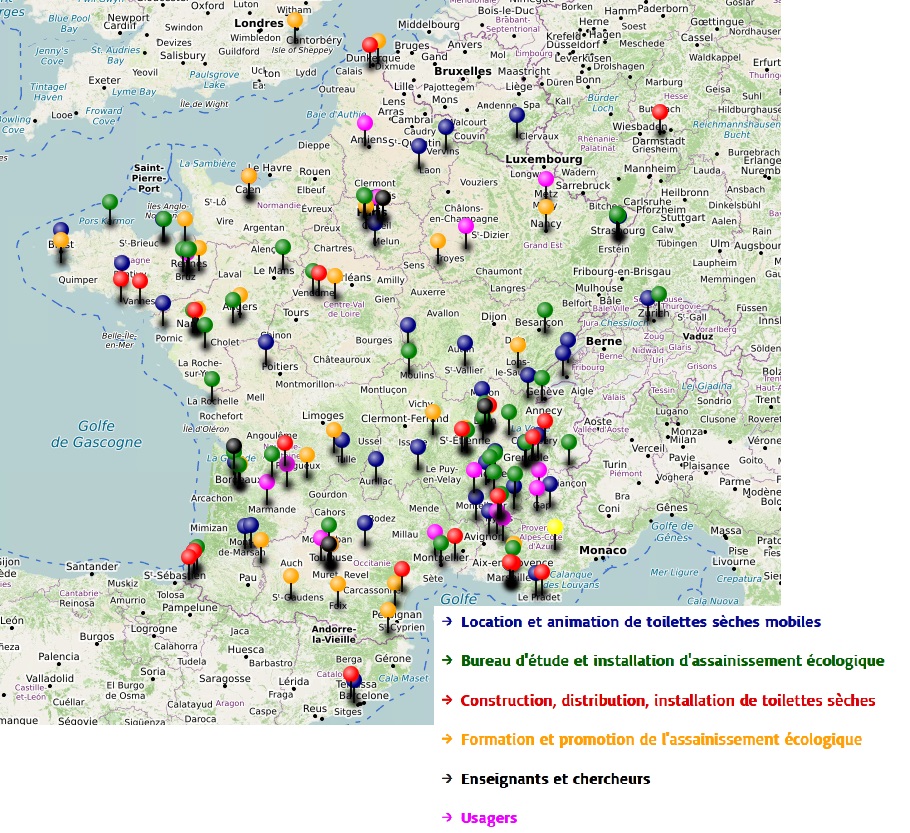
Since 2009, the network has been working in France with public and private sanitation stakeholders to defend the universal right to access decent sanitation facilities by acting as a proponent and promoter of ecological techniques (separate treatment of graywater and excreta; household, community, and public dry toilets; vegetated systems; wood chip filters).
Based on the principle that sanitation is a process that enables people to live in a healthy environment, ecological sanitation goes further, embracing a logic of recycling biomass and nutrients as well as respecting the material cycle.
Ecological sanitation is based on the following principles:
To achieve this, it relies on the following concepts:
At the heart of ecological sanitation are dry toilets.
Thus, human waste, as well as kitchen and garden waste, contribute to biomass recycling. Combined with the water cycle (rainwater harvesting, reuse of treated soapy water), the use of biomass in agriculture helps perfect the overall concept of viewing “waste” as a resource.
Missions
The association’s purpose, as defined in its bylaws, is to align its actions with the broader challenge of respecting natural water cycles and soil fertility. It is important for the RAE to advocate for greater public awareness of sustainable sanitation issues among the general public, policymakers, and economic stakeholders. To this end, its objectives can be summarized as follows: