
Solution proposed by : IRD
Ekolo Mundo does not control the feasibility or viability of the proposed solutions
Structure : IRD


Subtropical desert climate
Tunisia
Difficulty level :
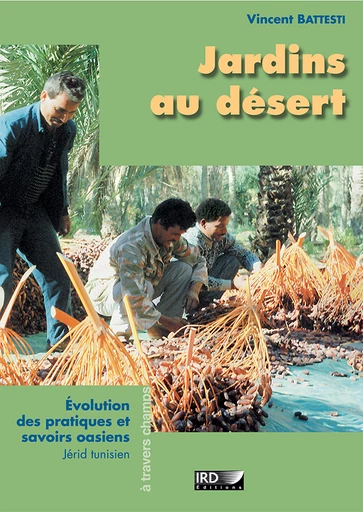
The presence of oases in the Sahara may seem like an ecological anomaly. The palm groves and gardens they contain are in fact the result of a millennia-long endeavor that continues to this day. These artificial landscapes—carefully shaped and maintained environments—are the archetype of human-shaped natural systems. This book is based on field surveys conducted in the Tunisian Jérid, as well as in the Tassili n'Ajjer (Djanet, Algeria) and the Draa River Valley (Zagora, Morocco). While this comparative perspective reveals the diversity of oasis practices and knowledge as well as relationships with the environment, it also highlights local dynamics that extend beyond the usual dualism between tradition and modernity. Furthermore, multiple scales of analysis—from the crop plot to the garden and from the smallholding to the palm grove—highlight the variety of interconnections between ecological, economic, and social factors. The cultivated Sahara offers not one, but multiple, constantly evolving oasis landscapes, shaped by this anthropological richness.
Publisher: IRD Éditions
Series: Across the Fields
Publication date: January 1, 2005