
Solution proposed by : Cyril Mercier
Ekolo Mundo does not control the feasibility or viability of the proposed solutions
Structure : France Volunteers


Difficulty level :
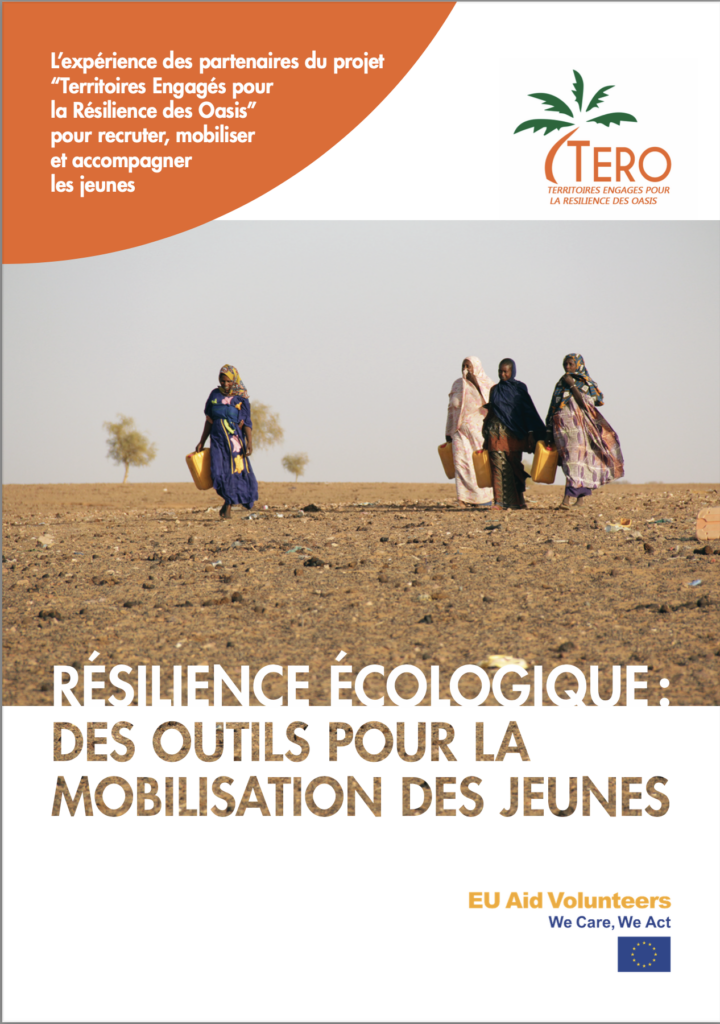
The experience of partners in the “Territoires Engagés pour la Résilience des Oasis” project (TERO Project) in recruiting, mobilizing
, and supporting young people
The oasis regions of Morocco, Mauritania, and Tunisia are experiencing climate change. This is disrupting national economies and affecting lifestyles and production methods in these areas. Young people are the most affected by the precarious socioeconomic context, which is exacerbated by environmental degradation.
“Mobilizing young people and engaging them in restoration and protection efforts, as well as supporting movements to preserve these living environments, is therefore a critical challenge for safeguarding this economic, social, and cultural heritage across the three countries.”
In the face of issues related to precariousness, civic engagement is an undeniable source of vitality for society. Through their involvement, young people bring energy and creative ideas to the community. Participating in an initiative or getting involved in an organization is a way for them to develop their civic engagement and bring about positive change in their communities.
Youth engagement on environmental issues enables the community to adopt more resilient habits by raising public awareness and fostering more respectful behaviors in daily life. Youth mobilization helps educate, raise awareness, and transfer knowledge and skills to other audiences. This knowledge and expertise are essential for adapting to climate change, mitigating its effects, and reducing its impact.
The organizations’ goal is to foster youth engagement, that is, to stimulate their determination and ensure the necessary resources for action. The activities carried out within the associations with engaged youth lead to the cross-cutting achievement of the 17 Sustainable Development Goals (SDGs), also known as global goals. ?
What is the purpose of a guide designed to mobilize young people to strengthen the resilience of oases in the face of climate change? Who is this document intended for, and what needs does it address?
The guide’s objectives:
The objective of this guide is to offer simple, clear, and practical ideas, tools, and advice to encourage and support youth mobilization around environmental issues in oases. Drawing on the concrete experience of the TERO project, this guide aims to promote the exchange of practices and activities gathered in Tunisia, Mauritania, and Morocco to facilitate their replication.
Who is it for?
This guide is intended for all community actors working to protect the environment who wish to mobilize young people to take initiatives for environmental resilience. More specifically, this guide is intended for members and staff of environmental organizations, associations, institutions, and local communities working on the ground in oases.
What are the needs of these target groups?
Civil society organizations share objectives of general interest such as combating desertification, preserving the environment, and promoting employment, among others.
Although these are community-wide goals, young people generally do not get involved, or only to a limited extent. It is therefore necessary to implement strategies to motivate and support the civic engagement of young people so that they take action on issues that affect them.
Indeed, while young people can be a key resource for organizations dedicated to environmental protection—especially in specific areas like oases—their mobilization is hindered by several challenges.
The training sessions conducted as part of the “Territoires engagés pour la résilience des oasis – TERO” project enabled us to identify specific needs among partner organizations dedicated to oasis conservation in Mauritania, Tunisia, and Morocco, including:
Methodology of the guide
To develop this guide, members of the TERO project engaged in a process of reflection on practices for mobilizing youth in oasis communities.
In a second step, the project teams worked to define what constitutes a youth mobilization activity.
This enabled them, in a third step, to analyze the activities implemented and identify areas for improving practices.
This guide thus brings together a collection of annotated activities as well as a list of tips to promote youth engagement.
The TERO project team hopes you will find ideas and inspiration here!
2019, Guide commissioned by the FRANCE VOLONTAIRES association and produced by NEXES, in collaboration with ASOC, TENMIYA, and AOFEP, and under the supervision of FOCSIV.